



Ecuador’s shrimp exports continue to grow, but the country’s mangrove ecosystems are paying the highest price.
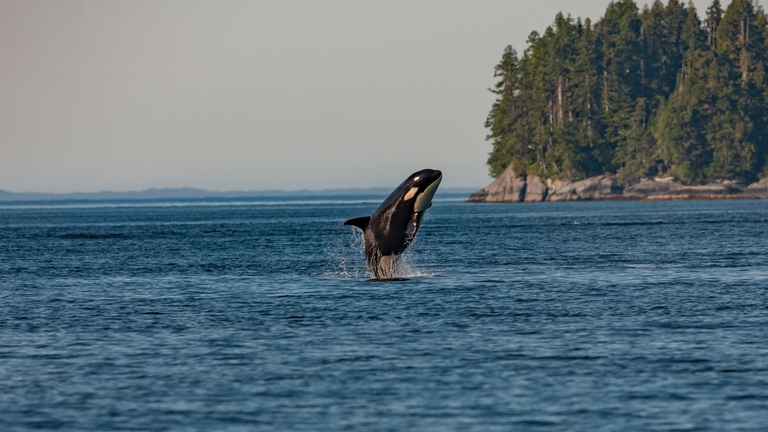
A study of tissue samples from killer whales in Canada was the first to find a dangerous toxic chemical, known as 4NP, in the animals’ flesh.
These findings emerged from a recent study by researchers from the Ocean Pollution Research Unit of the Institute for the Oceans and Fisheries of the University of British Columbia, the department of Biology of the University of Victoria, the DFO, and SGS AXYS Analytical Services Ltd. The study, titled “Emerging Contaminants and New POPs (PFAS and HBCDD) in Endangered Southern Resident and Bigg’s (Transient) Killer Whales (Orcinus orca): In Utero Maternal Transfer and Pollution Management Implications” was published in December 2022 by the American Chemical Society.
This research is a wake-up call. Southern residents are an endangered population and it could be that contaminants are contributing to their population decline. We can’t wait to protect this species.
The researchers behind this study analyzed tissue samples from Southern Resident Killer whales and six Bigg’s whales stranded along the local coastline between 2006 to 2018. The goal was to investigate the concentrations of selected ‘contaminants of emerging concern‘ (CECs) and new persistent organic pollutants (POPs) in the Southern Resident and Bigg’s killer whales in the Northeastern Pacific and the in-utero transfer of these contaminants in the selected species.
Their analysis showed that these chemicals are prevalent in this group of whales. In the samples, 4-nonylphenol was one of the most pervasive chemicals, making up 46 per cent of the identified animals. 4-nonylphenol, also known as 4NP, is an organic compound utilized in pulp and paper, detergents, soap, and textile processing and it’s listed as a toxic substance in Canada. This poisonous chemical makes its way into the ocean through industrial runoffs and sewage treatment plants.
Once it reaches the ocean, a phenomenon called biomagnification occurs. When this happens, the concentration of toxic chemicals builds up along the food chain from the smaller organisms that ingest them until it reaches apex predators like killer whales. This recent study is the first to identify the toxic chemical 4NP in killer whales. The most common substance among the so-called ‘forever chemicals,’ named so because of their persistence in the environment, found in the sampled whales was 7:3 FTCA. The researchers found that the identified chemicals transferred from mother to fetus. Ninety-five per cent of 4NP got transmitted through the womb.
The halting of the production of chemicals of concern, such as 4NP and 7:3 FTCA, and the identification and addressing of potential sources of marine pollution in the area are approaches that could mitigate pollutant sources and the contamination of SRKW’s habitat.
This investigation is another example of an approach that takes into account the health of people, animals and the environment, using killer whales as a case study to better understand the potential impacts of these and other compounds to animal and ecosystem health.
Siamo anche su WhatsApp. Segui il canale ufficiale LifeGate per restare aggiornata, aggiornato sulle ultime notizie e sulle nostre attività.

Quest'opera è distribuita con Licenza Creative Commons Attribuzione - Non commerciale - Non opere derivate 4.0 Internazionale.
Ecuador’s shrimp exports continue to grow, but the country’s mangrove ecosystems are paying the highest price.
Its oceanic microclimate, fertile soils, and the alternation of rain and sunshine make Normandy the ideal place for flax cultivation. A journey through the region offers a close-up look at the European flax supply chain, from cultivation to fibre processing.
Canada’s wildfire season this year is impacting air quality way beyond the borders of the North American state, reaching as far as Europe.
Two new studies have revealed that the retreat of the Thwaites Glacier is happening in a different, more complex way than previously understood.
The South African government is clamping down on the controversial multimillion-dollar lion-breeding industry, thanks to pressure from activists.
Switzerland’s glaciers are shrinking, with a new study finding that they have lost more than half their total volume since the early 1930s.
Santa Olalla, the last permanent lagoon in the park, has disappeared under the pressure of drought, overexploitation, and illegal wells.
Vulture populations in southern Asia experienced a 99% collapse and for a long time nobody knew why. Then, a historic discovery saved them.
The Indian government has pledged to reintroduce cheetahs, classified as a “vulnerable” species by the IUCN, into the wild. The animals will be transferred from Africa.


